


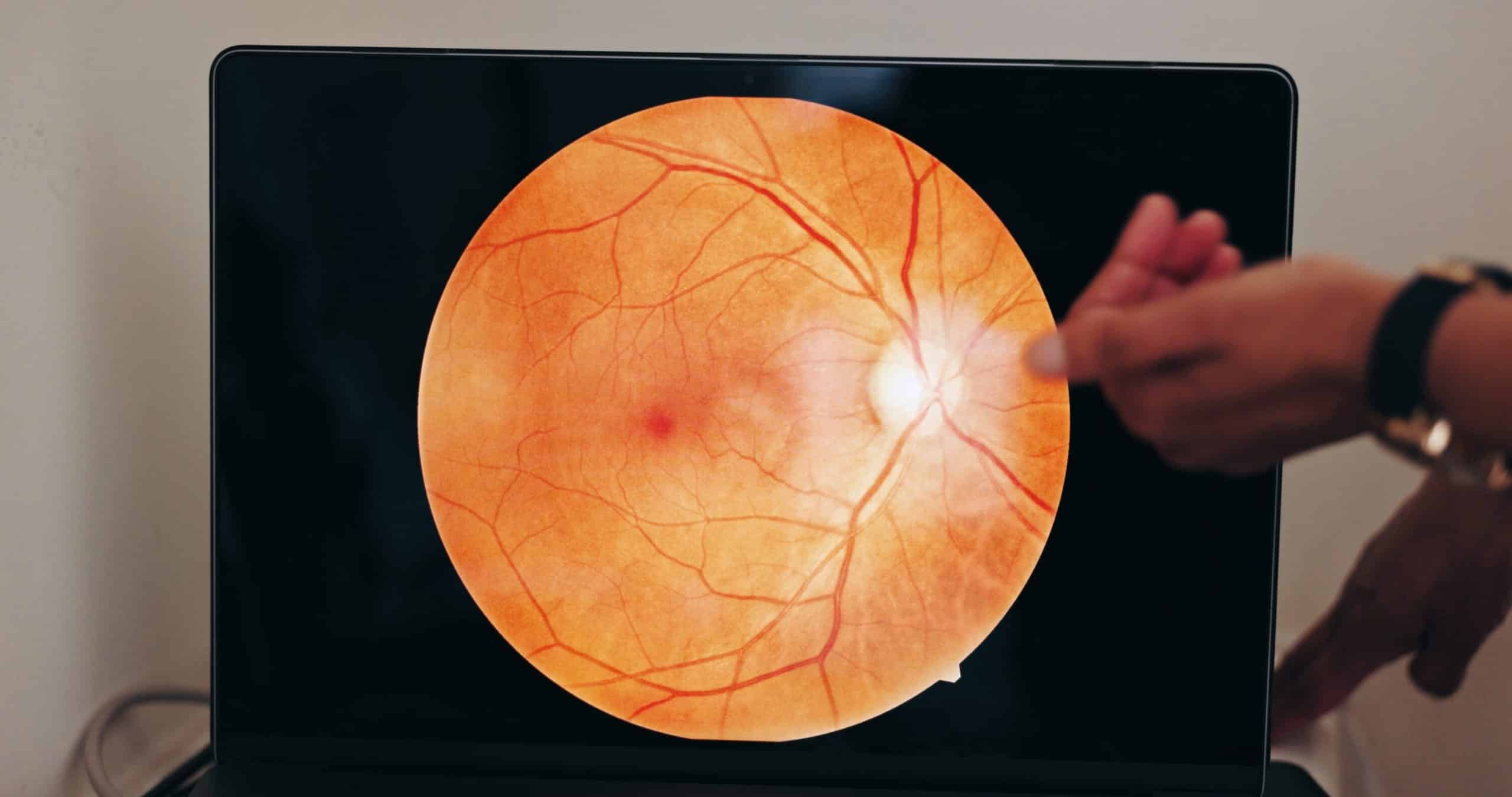
Diabetes and Your Eyes
Diabetes is the most common cause of preventable blindness in the USA, and is completely preventable with good blood sugar control. However, as most eye issues are “silent” or asymptomatic, it is recommended to be seen annually at the very least, with the possibility to be seen more frequently if needed.

Common Questions
How does diabetes affect the eyes?
Like elsewhere in the body, elevated blood sugar causes damage to the inside of blood vessels, causing them to leak. In the eyes, this can be seen/visualized as little spots of blood or the proteinaceous parts of the blood in the retina (inside of the back of the eye), swelling in the macula (part of the retina that provides our central vision), and possible new blood vessel growth in places where there aren’t meant to be blood vessels.
What are symptoms of diabetic eye disease?
Most forms of diabetic eye disease are silent, or without symptoms. However, sometimes it can cause blurry vision (that does not improve with blinking or instillation of eyedrops), sudden decrease in vision, new floaters, and eye pain. If any of these things happen, an urgent eye exam is recommended.
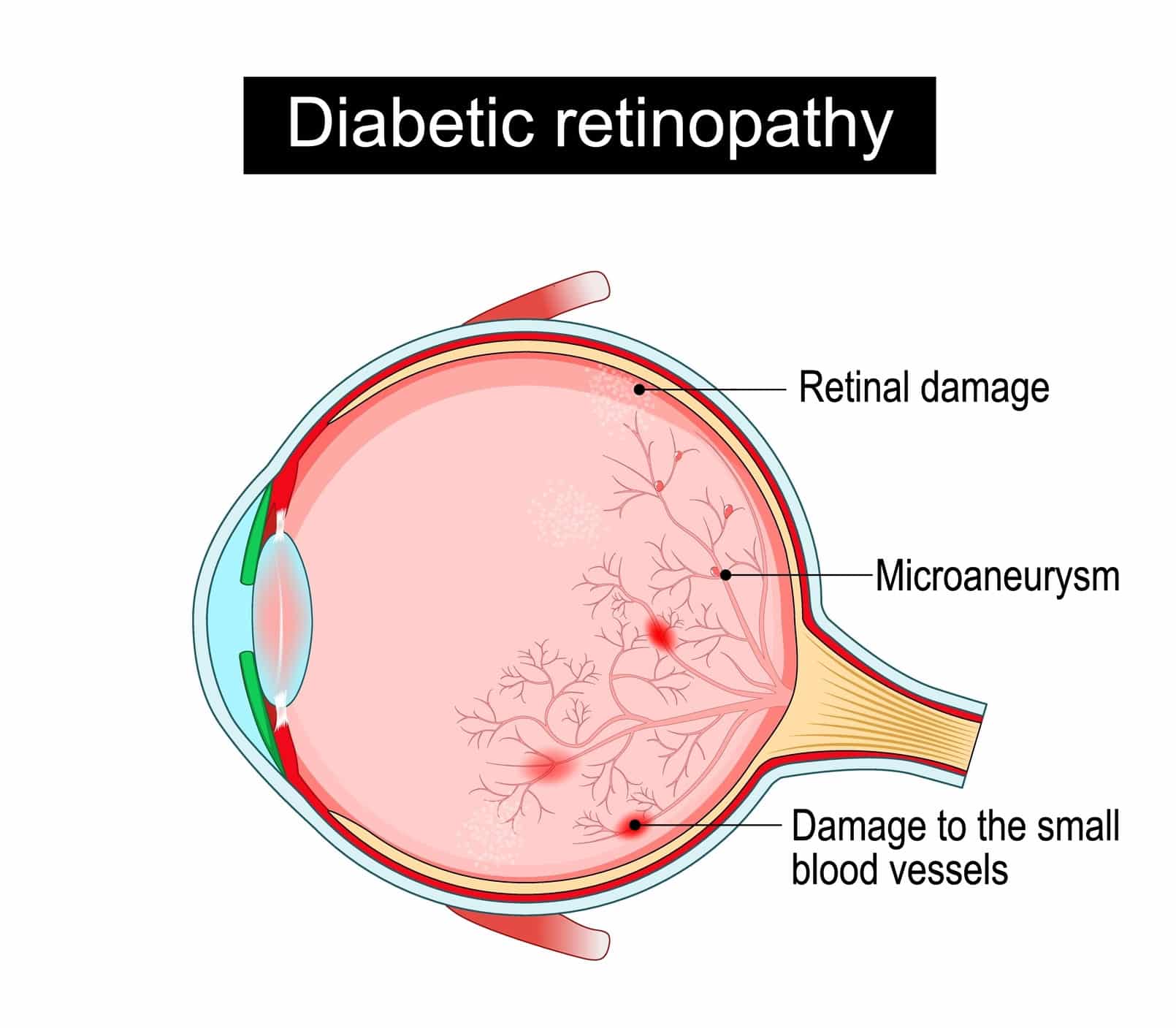
How Often You Should Be Seen
Type I and II Diabetics
Exam recommended at time of diagnosis and annually thereafter
Nonproliferative Diabetic Eye disease
Depending on severity, follow up can occur every few months to once a year. Completely reversible with good blood sugar control
Proliferative Diabetic Eye Disease
Recommend monthly eye exams, with high likelihood of being referred to a retina specialist.
Diabetic Macular Edema
Or, swelling in the macula (part of the back of the eye that provides central vision). Will require frequent exams and also referral to the retina specialist.
Ready to Schedule Your Visit?
Schedule your appointment today.